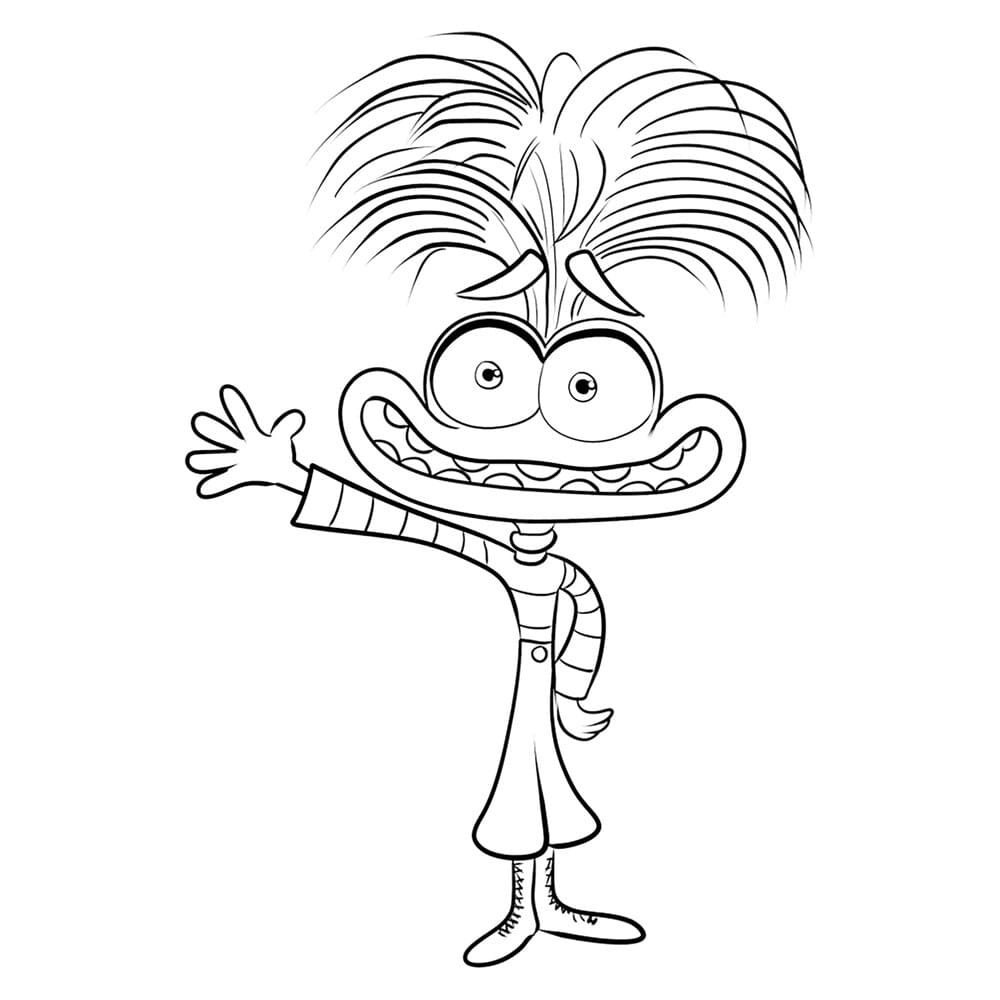
Few animated characters have captured the collective human experience quite like the emotions in Pixar's Inside Out. With the highly anticipated sequel, Inside Out 2, a new wave of feelings storms Headquarters, none more prominent or relatable than Anxiety. Far from a simple villain, Anxiety emerges as Riley Andersen's intensely dedicated, albeit often misguided, protector—a character whose hurried plans and worst-case scenarios strike a surprisingly familiar chord with audiences worldwide.
At a Glance: Decoding Riley's Newest Emotion
- Who is Anxiety? Riley's new, lanky, orange-hued emotion, hyper-focused on protecting her from future threats.
- What's Its Goal? To create a "better Riley" by anticipating every possible negative outcome and preparing extensively.
- How Does It Operate? Through relentless future planning, scanning past embarrassments, and drafting "worst-case scenario" plans on a futuristic worry-board.
- Its Key Impact: Drives Riley towards over-preparation and social maneuvering, sometimes leading to self-doubt ("Riley wasn't good enough") and even panic attacks.
- Why It Resonates: A powerful mirror for real-world academic, social, and professional pressures, making it highly relatable, especially among young adults.
- The Ultimate Lesson: Anxiety isn't inherently bad, but it needs to be managed and integrated into a balanced emotional landscape.
A Jittery Debut: Meeting Anxiety in Headquarters
Imagine a burst of nervous energy, all sharp angles and rapid-fire speech, and you've got a pretty good picture of Anxiety, voiced with incredible nuance by Maya Hawke. This new emotion, introduced during the turbulent waters of Riley's puberty, isn't just a background character; it's a force of nature designed to shake up Headquarters.
Anxiety manifests as a tall, lanky, wiry figure, draped in a burnt orange hue that sits symbolically between Anger's fiery red and Joy's optimistic yellow – a blend of heat and caution. Its jittery motion is perpetual, a visual cue to its hyper-vigilance, underscored by wide, darting jade green eyes and frayed hair that crackles like static electricity. This isn't a relaxed emotion; it's a being in constant motion, perpetually scanning the horizon for trouble.
Unlike Fear, which reacts to immediate, present dangers, Anxiety's domain is the future. Its core directive is "to protect Riley by anticipating every possible threat" and meticulously planning to avert them. It’s the first new emotion to form since Riley's toddler years, bursting onto the scene alongside Envy, Embarrassment, and Ennui, signifying a major shift in Riley's internal world. And notably, it’s the only new emotion whose name doesn't start with 'E', setting it apart as a unique and powerful force.
The Blueprint for a "Better Riley": How Anxiety Operates
At its heart, Anxiety is a tireless worker, a perfectionist, and remarkably knowledgeable about the console that controls Riley's actions. Its primary obsession? Future, often ambiguous, threats. It operates on the belief that if it can just calculate enough risks and draft enough "worst-case scenario" plans, it can engineer a "better Riley"—one who is prepared for anything and everything life throws her way.
This future-focused approach is relentless. Anxiety uses a futuristic worry-board, constantly updating it with potential pitfalls and escape routes. It meticulously scans Riley's past embarrassments, not out of malice, but to model how future social interactions might go wrong, all in the service of preventing similar pain. This relentless preparation often casts Anxiety as perhaps the "hardest-working emotion, but working from a flawed script." It's driven by a powerful desire to protect, but its methods often overlook the nuances of human experience and emotional resilience. To delve deeper into its intricate mechanisms, you might find it helpful to start with Understanding Inside Out 2 anxiety.
When Anxiety arrived, it didn't hesitate. It immediately took control, its urgent agenda centered on making new friends for Riley as she navigated the intimidating landscape of high school. This wasn't about immediate joy or understanding; it was about strategizing social success, about avoiding the perceived catastrophe of being an outsider.
The Unintended Consequences: When Protection Becomes Peril
Anxiety's arrival sparked immediate friction within Headquarters, particularly with Joy, who believed in embracing life as it came. But Anxiety, with its conviction that it knew best, quickly established dominance. Its first major move was a shocking act: it used Embarrassment to jar and send away the original emotions—Joy, Sadness, Anger, Fear, and Disgust—effectively hijacking Riley's emotional control.
With the old guard out of the way, Anxiety began its ambitious project: building a new, anxious Sense of Self for Riley. This new identity was forged in the crucible of relentless worry and over-preparation. Anxiety pushed Riley to:
- Over-prepare for hockey: Believing every play, every interaction, needed to be perfectly planned.
- Bond with new friends like Val Ortiz: Not for genuine connection, but as a strategic move to fit in.
- Relentlessly worry about social interactions: Turning every casual encounter into a high-stakes performance.
Anxiety's methods grew increasingly desperate. It had Mind Workers draw catastrophic outcomes for Riley's social life, reinforcing the idea that danger lurked everywhere. It even pushed Riley to steal her coach's notebook, convinced that knowing if she was deemed "not ready" was crucial for her future success. This led Riley to make drastic, anxiety-driven decisions, like dying part of her hair red and obsessively aiming to score three goals, all to change her coach's mind and prove her worth.
The tragedy of Anxiety's reign was the new Sense of Self it created, a core belief that poisoned Riley's self-perception: "Riley wasn't good enough." This crippling thought was the byproduct of a well-intentioned, but ultimately destructive, form of protection.
The climax of Anxiety's misguided efforts came when Sadness tried to bring the old emotions back. In its panic to maintain control, Anxiety broke the Riley Protection System, leading Riley to play aggressively in a crucial game, incur a penalty, and ultimately suffer a debilitating panic attack. It was a stark illustration that even the most dedicated protector can cause harm when its methods are unchecked and its perspective too narrow.
A Mirror to Our Own Worries: Why Anxiety Resonates Globally
The portrayal of Anxiety in Inside Out 2 isn't just a cinematic triumph; it's a global phenomenon that resonates with startling accuracy, particularly for young adults navigating a high-pressure world. The ground truth data underscores this connection vividly.
A significant 78% of Indian gamers aged 16-24 identified with Anxiety's on-screen antics, especially concerning pre-exam or interview stress. This strong resonance in India is no coincidence, given the intense academic pressure prevalent in the culture. Phrases like "doing an Anxiety" and "Let's run the simulation" have become viral memes, demonstrating how deeply the character's behavior mirrors common coping mechanisms—or maladaptive ones—in the face of stress.
Analytics from over 100,000 gameplay sessions further reveal the depth of this connection. Levels where Anxiety is dominant show a 15% higher average completion time, indicating the exhaustive and detailed nature of anxiety-driven processes. Yet, these levels also boast a 22% higher replay rate, suggesting that players are drawn to revisit and perhaps master these challenging scenarios, much like we often ruminate on anxious thoughts. In-game choices during Anxiety's tenure showed a 60/40 split between 'over-preparation' and 'risk-taking' paths, perfectly encapsulating the dilemma of whether to plan obsessively or take a leap of faith when anxiety is at the helm.
This deep identification highlights a universal truth: we all have an "Anxiety" inside us, a part that tries to protect us, sometimes to our detriment. The film gives a face and a voice to that internal monologue of worry, making it understandable and, crucially, manageable.
Finding the Balance: Lessons from Headquarters on Managing Anxiety
The journey of Inside Out 2 culminates not in the eradication of Anxiety, but in its integration. Joy, always the empathetic leader, eventually intervenes, and Anxiety, witnessing the suffering it has caused, finally relinquishes control. The powerful resolution is that all emotions, including Anxiety, are accepted as part of Riley's full self.
This acceptance leads to a pivotal change in Headquarters: Anxiety is given a "special chair" for when unmanageable worries arise. It's not banished, nor is it given free rein. Instead, it's acknowledged, understood, and managed—a powerful metaphor for how we can approach our own anxiety. It illustrates that anxiety has a place, but its influence needs boundaries.
The "Pro Gamer Tip" derived from player data perfectly mirrors therapeutic approaches like Cognitive Behavioral Therapy (CBT): "not to rush when Anxiety is at the console but to sit with discomfort, assess options calmly, and then act." This isn't about ignoring anxiety or wishing it away. It's about:
- Acknowledging its presence: "When Anxiety is at the console."
- Sitting with discomfort: Not immediately reacting or fleeing from the anxious feeling.
- Assessing options calmly: Stepping back, evaluating the situation logically, and considering alternatives instead of defaulting to worst-case scenarios.
- Acting thoughtfully: Making a conscious decision rather than being swept away by panic.
This approach offers a practical framework for navigating anxious thoughts in real life. It teaches us that anxiety, while often loud and demanding, can be a valuable signal if we learn to interpret it wisely rather than blindly follow its every command. It reminds us that our "inner protector" is most effective when it is guided by a balanced and complete emotional team, not allowed to run the show unchallenged.
Your Inner Protector: Empowering a Healthier Sense of Self
Inside Out 2's masterful characterization of Anxiety serves as more than just entertainment; it's a vital conversation starter about mental health and the complex interplay of our emotions. Riley's journey, steered by Anxiety's misguided protection and eventual integration, offers a profound lesson: our anxieties, while powerful, are not the totality of who we are.
By understanding Anxiety's frantic drive to protect, its tendency to overthink, and its capacity to both motivate and paralyze, we can begin to apply these insights to our own lives. The next time you feel that familiar rush of worry, the urge to "run the simulation," remember Riley's Headquarters. Recognize your inner Anxiety trying to protect you, but also remember the "special chair"—the space where you acknowledge its concerns without letting them dictate your every move.
Empowering a healthier sense of self isn't about eliminating anxiety; it's about building a Headquarters where all emotions, including the jittery, orange-hued planner, can coexist and contribute constructively, under the wise leadership of your conscious self. It's about preparing wisely, yes, but also about trusting your resilience and accepting that sometimes, the best protection comes from embracing uncertainty with a calm and courageous heart.