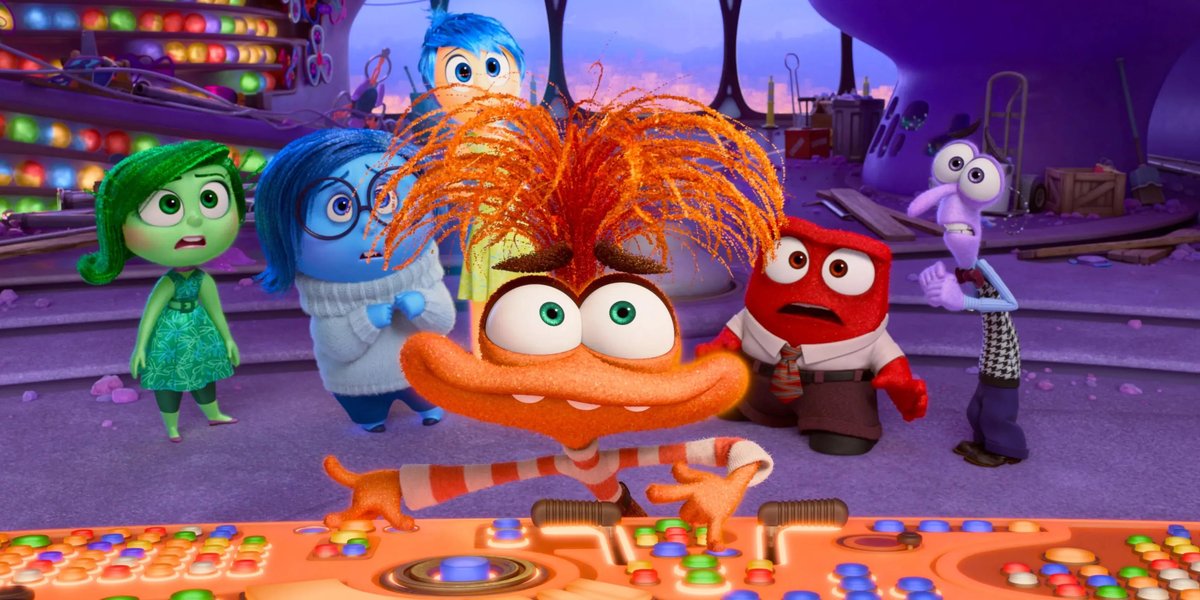
Disney/Pixar's Inside Out 2 has once again captivated audiences, but this time, it's a new emotion that's truly stealing the spotlight: Anxiety. Voiced brilliantly by Maya Hawke, this frazzled, orange-hued character isn't just a quirky addition; she’s a profound personification of the turbulent feelings many teenagers experience, especially at the cusp of adolescence. As Riley Andersen turns 13 and navigates the complexities of high school tryouts and new friendships, Anxiety storms into Headquarters, reflecting the very real, often overwhelming, worries that accompany significant life changes.
Anxiety's arrival signals a seismic shift in Riley's mind, challenging the established order and offering viewers a raw, honest look at the inner workings of a developing mind. Her role goes far beyond simple nervousness; she embodies the intense planning, overthinking, and worst-case scenario projections that can dominate a teenager's thoughts. This character quickly became the heart of many discussions, sparking conversations about mental health and the universally understood experience of growing up.
Unpacking the Frazzled Force: Who is Inside Out 2's Anxiety?
From her perpetually uncomfortable physical design – an itchy turtleneck, high pants, tight boots, and carrot-greens-like hair – to her hyper-alert, zealous personality, Anxiety is a masterclass in character development. She isn't just a single emotion, but a complex bundle of anticipatory fears, driven by an intense desire to protect Riley from unseen dangers and ensure her future success. Initially perceived as an antagonist, her true motivation is deeply rooted in a misguided love for Riley, pushing her to succeed at all costs, like making the high school hockey team.
Delving deeper into her origin and evolution from a "Cardboard Villain" to a nuanced character motivated by love reveals a fascinating creative journey. Understanding her specific traits, her design choices, and her ultimate purpose within Riley's mind is key to appreciating her impact. For a complete breakdown of her persona, story arc, and the intricate details that make her so compelling, we invite you to explore our comprehensive Character Analysis: Anxiety in Inside.
Why We All Relate: The Power of Honest Portrayal
One of the most powerful aspects of Inside Out 2's Anxiety character is her profound relatability. Audiences worldwide have seen their own experiences of stress, overthinking, and the pressure to perform reflected in Riley’s struggle with Anxiety. Her frantic energy and her tendency to project fears – imagining every possible negative outcome – strike a chord with anyone who has ever felt overwhelmed by life's uncertainties. The film's depiction of her creating imaginative scenarios and fostering Riley's overthinking perfectly illustrates how anxiety can consume our thoughts.
The widespread praise from critics and viewers alike for Maya Hawke's energetic vocal performance and the character's personality underscores how accurately Inside Out 2 captured this complex human emotion. This authenticity is a major reason why so many found themselves saying, "That's exactly how it feels!" To dive into the specific ways viewers are connecting with this new emotion and sharing their own experiences, discover how many of us truly Relate to Inside Out 2s anxiety.
Beyond the Screen: The Psychology Behind Riley's Turmoil
Inside Out 2 isn't just entertainment; it's a brilliant, accessible lesson in adolescent psychology. The film's creators worked closely with psychologists like Lisa Damour and Dacher Keltner to ensure an accurate and sensitive portrayal of anxiety, especially as it manifests during puberty. The climax of Anxiety's arc, where Riley experiences a severe panic attack, is depicted with staggering accuracy, animated with a "frenetic whirlwind" of up to 106 Anxieties around the console. This scene, inspired by Lisa Damour's insights into grounding techniques, offers a visceral understanding of what a panic attack truly feels like.
This commitment to psychological realism elevates Inside Out 2 beyond a simple children's movie, making it a valuable tool for understanding the emotional landscape of growing up. It provides a visual metaphor for the intense internal battles many face, from the drive to forge a new "Sense of Self" based on external validation ("If I'm a Firehawk, then I won't be alone") to the accidental harm caused by intense pressure. For a deeper exploration of the scientific and therapeutic principles woven into the narrative, learn more about the Psychological Representation of Anxiety in film.
Finding Balance: Learning from Riley's Journey
Riley's journey with Anxiety ultimately offers a message of hope and coexistence. After pushing Riley to the brink, leading to her ignoring teammates and injuring a friend, Anxiety realizes her mistake, apologizes, and relinquishes absolute control. The film culminates in the understanding that anxiety isn't an emotion to be eradicated, but one that needs to learn its place alongside joy, sadness, fear, and disgust. The scene where Riley overcomes her panic attack by touching a hockey stick is a powerful illustration of a coping mechanism.
This arc provides invaluable lessons on navigating challenging emotions and finding healthy ways to cope when things feel overwhelming. It highlights the importance of grounding techniques, self-compassion, and the eventual integration of all emotions for a balanced sense of self. For practical advice and actionable steps inspired by Riley's experiences, delve into effective Coping Strategies Inspired by Inside.
Conversations That Matter: Discussing Anxiety with Young Minds
The brilliance of Inside Out 2 lies not just in its portrayal of anxiety, but in its ability to open up crucial conversations. For parents, educators, and caregivers, the film provides an accessible and empathetic entry point for discussing complex emotions with children and teenagers. It normalizes the experience of anxiety, showing that it's a natural, albeit sometimes intense, part of life, especially during transitional periods like puberty.
Using the character of Anxiety, along with the other emotions, can help young people articulate their feelings, understand internal conflicts, and recognize that it's okay to feel worried or overwhelmed. This movie is a powerful catalyst for empathy and understanding, fostering an environment where emotional well-being can be openly discussed. To help navigate these important discussions with the younger generation, check out our comprehensive Inside Out 2 anxiety guide.
Moving Forward with Empathy
Inside Out 2 has gifted us more than just a memorable character; it has given us a vital tool for understanding and discussing one of the most prevalent emotions in modern life. As we continue to navigate a world full of uncertainties, the lessons from Riley's mind offer a pathway to greater self-awareness and empathy for those around us. Let the conversations sparked by Anxiety continue, fostering a future where emotional health is understood, supported, and openly embraced.