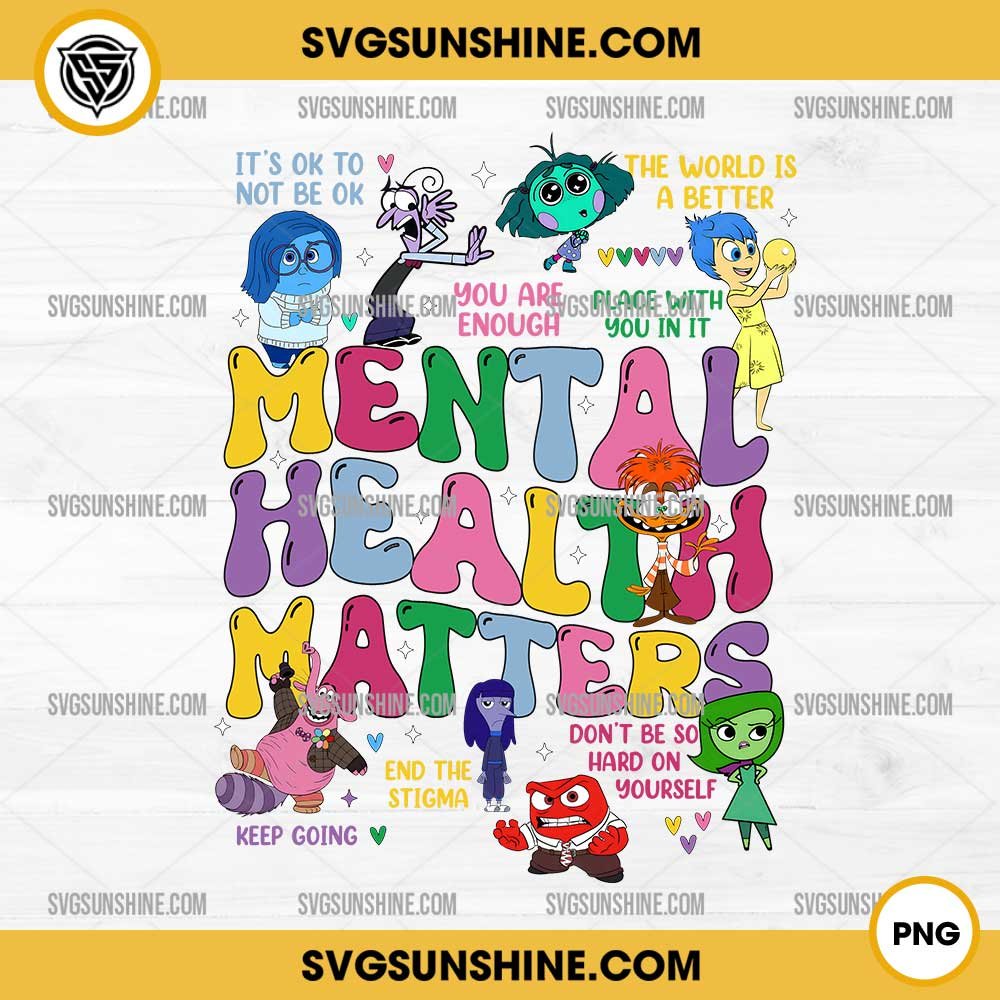
"Inside Out 2" doesn't just entertain; it gently pulls back the curtain on the incredible, often messy, inner workings of our minds, offering a profound expansion of its original message. This time, the film dives headfirst into adolescence, showing us that navigating our emotional landscape isn't about maintaining a perfect state of "Joy" but about embracing Inside Out 2's Broader Mental Health Message that true well-being comes from acknowledging and integrating all our emotions.
As Riley barrels through her teenage years, the movie beautifully illustrates a crucial mental health lesson: growth means complexity, and complexity is normal. It's a powerful reminder that the journey to a healthy mind isn't about eradicating "bad" feelings, but about understanding what each one—even the uncomfortable ones—is trying to tell us.
At a Glance: Key Takeaways from Inside Out 2's Mental Health Message
- Emotional Diversity is Normal: As we age, our internal world expands with new, complex emotions like Anxiety, Envy, Embarrassment, and Ennui. This is a sign of growth, not a problem to fix.
- Anxiety Has a Purpose: While it can overwhelm, a healthy dose of anxiety helps us prepare and strive. The goal isn't to eliminate it, but to manage it and channel its energy.
- Balance Your Self-Perception: True self-image embraces both strengths and weaknesses, successes and failures. Authenticity over perceived perfection.
- Emotions Work Together: Mental health isn't about being consistently happy; it's about all your emotions cooperating to help you navigate life.
- Resilience Through Change: Adolescence is a period of constant flux. Adapting to change, rather than resisting it, is key to maintaining your mental footing.
- Seek Support: It's okay, and important, to lean on friends, family, and professionals when emotional challenges feel too big to handle alone.
The Teenage Brain: A New Command Center
The first "Inside Out" introduced us to the core five emotions—Joy, Sadness, Fear, Anger, and Disgust—masterfully guiding young Riley through childhood. "Inside Out 2" picks up as Riley hits puberty, an era marked by seismic neurodevelopmental shifts. Suddenly, the console of her mind isn't just about simple cause-and-effect; it’s a bustling, often chaotic, new headquarters.
The film brilliantly visualizes this by introducing a slew of new emotions: Anxiety (voiced by Maya Hawke), Envy, Embarrassment, and Ennui. These aren't just new characters for a sequel; they represent the increased complexity, nuance, and often overwhelming emotional life that defines adolescence. It’s a period where mixed feelings and ambivalence become common companions, challenging the neat, tidy emotional states of earlier years. The core message here is profound: this expansion of your emotional repertoire is not a bug in the system, but a vital feature of human maturation.
1. Embracing Emotional Diversity: Your Growing Inner World
Imagine your mind as a city. In childhood, it might have been a quaint town with five main districts. As you grow, that city expands, incorporating new suburbs, industrial zones, and quiet parks. Each new area serves a purpose, even if you don't immediately understand its value.
This is precisely what "Inside Out 2" illustrates with Riley's new emotions. For teenagers and adults alike, our emotional landscape becomes more complex, more nuanced, and often, more contradictory. You might feel excitement for a new opportunity mixed with a knot of anxiety about performing well. You might feel love for a friend alongside a pang of envy for their recent success. This "emotional complexity" is normal and essential for navigating the adult world.
Why This Matters: Many of us are taught, implicitly or explicitly, to suppress "negative" emotions. We might push away anger, feel ashamed of sadness, or try to logic our way out of fear. But what "Inside Out 2" gently reminds us is that every emotion carries information. They are messengers, not enemies.
Practical Tip: Mindful Emotional Check-ins
When a new or uncomfortable emotion arises, instead of immediately judging it or trying to push it away, pause and ask yourself:
- "What is this emotion trying to tell me?"
- "What event or thought might have triggered it?"
- "Is there a need here that isn't being met?"
This simple act of mindful inquiry can transform a confusing feeling into a valuable insight. It’s about recognizing and welcoming this diversity as crucial for mental well-being, rather than fearing it.
2. Anxiety's Protective Role: Friend or Foe?
Perhaps the most prominent new emotion is Anxiety, a whirlwind of nervous energy convinced that something, somewhere, needs to be prepared for, fixed, or worried about. The film doesn't paint Anxiety as an outright villain; rather, it explores its often well-intentioned, albeit sometimes chaotic, purpose.
Excessive anxiety can indeed be paralyzing, leading to avoidance, burnout, and distress. But "Inside Out 2" shows us that a healthy amount of anxiety isn't inherently negative. It can be a potent motivator, prompting us to:
- Prepare thoroughly: Anxiety can drive you to study for that test, practice for that presentation, or plan your schedule meticulously.
- Consider outcomes: It can make you think through potential risks and rewards, helping you make more informed decisions.
- Strive for success: A little nervous energy can push you to do your best, to care about the outcome.
Why This Matters: Our society often demonizes anxiety, encouraging us to get rid of it entirely. But the film suggests a more nuanced approach: the goal isn't to eliminate anxiety, but to understand it, manage it effectively, and use it as a tool for growth. It helps us understand that the protective mechanisms in our brains, while sometimes overzealous, are fundamentally trying to keep us safe and successful. If you're looking for a deeper dive into this particular emotion, you'll find a wealth of information in Your Guide to Inside Out 2 Anxiety.
Practical Tip: Channeling Anxious Energy
When you feel anxiety bubbling up, try to differentiate between productive anxiety and paralyzing anxiety. - Productive Anxiety: Channel this energy into concrete planning and preparation. Make a list, create a schedule, rehearse what you need to do. Accept it as a natural response to uncertainty.
- Paralyzing Anxiety: If anxiety is stopping you from acting, try grounding techniques like deep breathing, or focus on taking one small, manageable step forward. Recognize that not all "what-ifs" need to be solved immediately.
3. Balanced Self-Perception: The True Self is Nuanced
Teenage years are often a crucible for self-identity. The urge to "fit in" or present a "perfect" self can be overwhelming, leading to a relentless pursuit of external validation. "Inside Out 2" deftly addresses this by showcasing Riley's struggles to define herself, often trying to suppress aspects of her personality that she perceives as undesirable.
The film gently nudges us towards a healthier perspective: a balanced self-image requires embracing both strengths and weaknesses, successes and failures. It's about resisting the urge to curate a flawless persona for others, or to dwell solely on perceived flaws. Your true self isn't a highlight reel of your best moments, nor is it a montage of your biggest mistakes. It's a rich, complex mixture of all your experiences, emotions, and characteristics.
Why This Matters: In an age dominated by social media, the pressure to present a sanitized, perfect version of ourselves is immense. This often leads to feelings of inadequacy, imposter syndrome, and a deep sense of loneliness. "Inside Out 2" champions authenticity, reminding us that genuine connection and inner peace stem from accepting who you truly are, flaws and all.
Practical Tip: Crafting Your Authentic Story
Instead of focusing on what you should be, reflect on who you are.
- Acknowledge Your Whole Story: Think about moments of triumph and moments of struggle. How did each contribute to who you are today?
- Practice Self-Compassion: Treat yourself with the same kindness and understanding you would offer a good friend. Recognize that everyone makes mistakes and has imperfections.
- Seek Genuine Connections: Surround yourself with people who celebrate your authentic self, not just your achievements.
4. Emotional Cooperation: A Symphony, Not a Solo Act
One of the most powerful underlying messages of "Inside Out 2" is that mental health isn't about maintaining one constant emotional state—like eternal Joy. Instead, it’s about recognizing and utilizing different emotions, allowing them to work together to navigate life's inevitable challenges. It's a dynamic, cooperative effort, not a single emotion trying to rule the roost.
The film visually depicts this as the emotional console becoming a shared space, where different emotions take turns at the controls, or even work in concert. When Anxiety tries to take over entirely, things go awry. When Joy tries to suppress everything else, the true Riley gets lost. The path to well-being lies in integration and collaboration.
Why This Matters: This aligns beautifully with several modern therapeutic approaches, such as Dialectical Behavior Therapy (DBT), Acceptance and Commitment Therapy (ACT), and Mindfulness-Based Stress Reduction (MBSR). These therapies emphasize emotional regulation, distress tolerance, and the acceptance of all internal experiences as part of a rich, full life, rather than focusing on the eradication of "negative" emotions. They teach us to observe our emotions without judgment and to make choices aligned with our values, even when uncomfortable feelings are present.
Practical Tip: The Emotional Check-in for Better Choices
When you're overwhelmed or unsure how to proceed, consciously "check in" with your emotions:
- "What am I feeling right now?" (Identify all the emotions, even conflicting ones).
- "What is each of these emotions trying to communicate to me?"
- "Given what I'm feeling and what my values are, what is the wisest choice I can make in this moment?"
This process helps you tap into your internal wisdom and make choices that are aligned with your well-being, rather than being hijacked by a single dominant emotion.
5. Adapting to Change: Navigating Life's Shifting Sands
Adolescence is synonymous with change: new schools, evolving friendships, shifting interests, and a rapidly changing sense of self. "Inside Out 2" foregrounds these transitions, showing Riley grappling with the move to high school, the pressures of fitting in with a new hockey team, and the potential loss of old friendships.
The film underscores that change is an inevitable and constant part of life. True resilience and mental health involve flexibly adjusting to new circumstances and adapting to these changes while maintaining your core values and identity, rather than rigidly resisting them. Trying to hold onto "how things used to be" can lead to significant distress and prevent personal growth.
Why This Matters: Life is a continuous series of transitions, big and small. From career changes to relationship shifts, geographical moves to personal development, our ability to adapt is a cornerstone of our mental fortitude. The film provides a gentle blueprint for navigating these periods of uncertainty with greater ease and less internal conflict.
Practical Tip: Embracing the Fluidity of Life
When facing significant change, focus on what you can control and cultivate a flexible mindset:
- Identify Controllables: What aspects of this change are within your influence? Focus your energy there.
- Set Small, Adaptable Goals: Break down large transitions into smaller, manageable steps. Allow your goals to evolve as new information comes to light.
- Allow for Mixed Emotions: It's normal to feel excited and scared, sad and hopeful all at once. Give yourself permission to feel and learn from these complex, often contradictory, emotions. Resisting these feelings only amplifies their power.
Beyond the Screen: Taking the Message to Heart
"Inside Out 2" doesn't just offer charming characters and a compelling storyline; it serves as a remarkably valuable resource for discussions on emotional development, regulation, and overall mental well-being for audiences of all ages. It normalizes the presence of all emotions—even those we typically label "negative"—and makes a powerful case for the importance of understanding and accepting the full range of human emotions.
The brilliance of the film lies in its ability to present complex psychological concepts in an accessible, relatable way. It reinforces a message that mental health professionals have long championed: emotional health involves understanding, accepting, and integrating your entire emotional spectrum, not just the "happy" parts.
Common Questions About Our Emotional Landscape, Answered
Q: Is it really okay to feel "negative" emotions like Anger or Sadness?
A: Absolutely. "Inside Out 2" beautifully illustrates that all emotions, even those considered "negative," serve a purpose. Anger can signal a boundary has been crossed, sadness can indicate loss and a need for connection, and fear can protect us from danger. The key is to acknowledge them, understand their message, and manage them constructively, rather than suppressing or being overwhelmed by them.
Q: How do I know if my anxiety is "healthy" or "excessive"?
A: Healthy anxiety is typically temporary, proportional to the situation, and motivates you to take constructive action (like preparing for an event). Excessive anxiety, as shown when Anxiety tries to permanently sideline Joy and Sadness, is often persistent, disproportionate, interferes with daily life, causes significant distress, and leads to avoidance or paralysis. If your anxiety regularly prevents you from doing things you value, causes physical symptoms, or feels out of control, it might be time to seek support from a mental health professional.
Q: Can I really make my emotions "work together"? It feels like they're always fighting!
**A: **Yes, you can! The concept of emotional cooperation doesn't mean your emotions will always be in perfect harmony. It means developing the awareness to recognize what each emotion is trying to communicate and then choosing how to respond, rather than letting one emotion dictate all your actions. Techniques like mindfulness, journaling, and talking through your feelings can help you understand the different "voices" inside you and foster better internal communication.
Q: Why do I suddenly have new, more complicated feelings as an adult? I thought I had it all figured out.
A: Just like Riley's transition to adolescence, adult life continues to present new challenges and complexities that can introduce new emotional experiences. Major life events, new responsibilities, relationship changes, and personal growth can all bring about emotions like ennui (boredom with the familiar), deeper envy (in professional or social contexts), or more nuanced forms of embarrassment. This is a natural part of ongoing personal development; our emotional repertoire never truly stops evolving.
Your Next Step: Befriending Your Inner World
"Inside Out 2" leaves us with a profound message: your inner world is not meant to be a simple, singular space, but a rich, diverse ecosystem where every emotion plays a vital role. The journey through life, especially through formative periods like adolescence, is about learning to navigate this complexity with curiosity, compassion, and a willingness to understand all the voices within you.
So, as you reflect on Riley's adventures, consider your own emotional landscape. What new emotions have arrived in your life? What are they trying to tell you? And how can you invite them to the console, not as intruders, but as essential members of your inner team, helping you live a richer, more authentic, and mentally healthier life? Embrace the beautiful, messy, multifaceted symphony that is you.