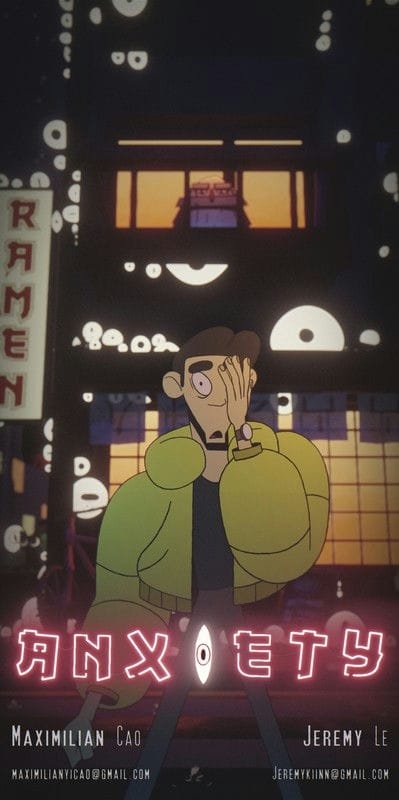
The flickering glow of a cinema screen often serves as a mirror, reflecting our deepest fears, hopes, and increasingly, our anxieties. For decades, the Psychological Representation of Anxiety in Film has evolved from subtle metaphors to raw, unflinching portrayals, mirroring a global rise in mental health awareness and a collective demand for authenticity. What was once relegated to a comedic trope or a villain's eccentricity is now a complex, central character, inviting us to confront, understand, and perhaps even heal.
This isn't just about entertainment; it's about validation, education, and destigmatization. When film gets anxiety right, it doesn't just tell a story – it opens a dialogue, challenging taboos and exposing the intricate, often isolating inner workings of the anxious mind.
At a Glance: Why Anxiety on Screen Matters More Than Ever
- Global Surge: Anxiety disorders have increased by nearly 25% globally since 2015, making authentic portrayals more crucial than ever.
- Audience Demand: Viewers actively seek films that validate their experiences with anxiety, leading to double the engagement rates for mental health categories on streaming platforms.
- Psychology in Hollywood: Experts like Helen Hsu, PsyD, and Virginia Breland-Noble, PhD, are increasingly consulting with filmmakers to ensure accuracy and foster positive mental health messaging.
- Powerful Impact: Research shows viewers of authentic anxiety films are more likely to discuss struggles, seek help, and show empathy.
- Beyond Stereotypes: The shift is from "quirky neurotic" tropes to "gritty, lived experience," showcasing diverse characters and healthy coping mechanisms.
- Cinematic Tools: Directors use specific techniques—staccato editing, atonal scores, extreme close-ups—to visually and audibly convey the internal experience of anxiety.
- Viewer Empowerment: Choosing films thoughtfully, setting boundaries, and engaging in post-viewing routines are key to a healthy cinematic experience.
The Unseen Tensions: Why Anxiety Became Film's New Protagonist
Anxiety is no longer just a plot device; it's often the very fabric of the story. You don't have to look far to see its omnipresence, both in our lives and on our screens. The World Health Organization reported a nearly 25% increase in global anxiety disorders since 2015, a stark statistic that correlates directly with a surge in anxiety-themed films and their impressive box office success. This isn't a coincidence; it's a reflection of a world grappling with uncertainty, and an audience yearning for cinematic experiences that resonate with their internal battles.
This societal shift has catalyzed a profound change in cinematic storytelling. Audiences are no longer content with surface-level depictions. They're actively searching for films that offer a nuanced, "gritty, lived experience" of anxiety, depression, and trauma, moving far beyond the simplistic "quirky neurotic" caricatures of yesteryear. When a streaming platform reports that films in "mental health" or "anxiety" categories see double the engagement rates of traditional genres, it's a clear signal: authentic emotional representation is a powerful draw.
When Psychology Consults Hollywood: The Quest for Realism
The journey toward more accurate on-screen anxiety isn't happening in a vacuum. A quiet revolution is underway, driven by psychologists and mental health experts increasingly partnering with the entertainment industry. Their mission: to improve portrayals, challenge stigma, and offer viewers a more truthful reflection of mental health conditions.
Behind the Scenes: Psychologists Shaping Narratives
Imagine a film script dealing with a panic attack, a nuanced depiction of OCD, or the subtle signs of social anxiety. Historically, these scenes might have relied on stereotypes. Today, a growing number of creatives are reaching out to experts. This collaboration is mutually beneficial: psychologists lend authenticity, while creatives craft more realistic characters and compelling narratives. As Ashley Kolaya, head of the Mental Health Storytelling Initiative, explains, connecting psychologists with entertainment opportunities and fostering effective communication between these distinct worlds is crucial.
Psychologists contribute in diverse ways beyond just script reviews. They might create supplementary educational materials, guide meditations for cast members, or even appear on camera as experts. The Entertainment Industry Mental Health Coalition, for instance, was involved in Paramount+'s "Wolf Pack," where an impressive 75% of viewers reported learning new coping mechanisms like "Lion's breath." This illustrates the profound public health impact that well-informed storytelling can have.
From "13 Reasons Why" to "The Chi": Impactful Partnerships
Several psychologists have already left an indelible mark on major productions:
- Helen Hsu, PsyD, an expert in adolescent and multicultural mental health, consulted on Netflix's "13 Reasons Why." She pushed for portraying the long-lasting impacts of suicide and accurately depicted the immense challenges faced by school counselors. Despite its controversial nature, the show was linked to increased crisis line calls, suggesting it spurred vital conversations.
- Virginia Breland-Noble, PhD, brought her expertise to Showtime's "The Chi," helping to model healthy support-seeking behaviors within communities where therapy is often stigmatized or inaccessible. Such portrayals chip away at barriers to care.
- Kathy Hirsh-Pasek, PhD, a developmental psychologist, informed PBS Kids' "Through the Woods," specifically designed to help young viewers develop problem-solving skills and resilience, demonstrating that mental health education can start early.
- Dr. Janina Scarlet Letamendi, host of "The Arkham Sessions" podcast, champions how media, even fantastical stories, can build community, reduce loneliness, and teach resilience.
These examples highlight a critical point: the goal isn't necessarily perfection, but rather moving the portrayal closer to accuracy. Psychologists in Hollywood often face demanding, competitive environments, sometimes with little compensation. But the platform for impact is immense, making the effort worthwhile. They must develop niches, ditch academic jargon, be visible, network relentlessly, and, crucially, know when to compromise without sacrificing integrity.
The Numbers Don't Lie: What's Still Missing
Despite these strides, there's significant room for improvement. A 2023 study revealed that a mere 2% of 3,815 characters in 100 top films experienced a mental health condition. Even more concerning, when mental illness is depicted, it's often fraught with misinformation. In 2022 films, 72% of characters with mental health conditions were portrayed as perpetrators of violence—a gross misrepresentation, given that most people with mental illness are not violent. Dehumanizing language like "freak" and "crazy" is still common, and characters rarely seek or receive effective treatment.
This underscores the ongoing need for psychologists to be involved at every stage, from script development to marketing, ensuring that the Psychological Representation of Anxiety in Film genuinely serves the public good rather than perpetuating harmful myths.
Decoding Anxiety on Screen: How Filmmakers Show, Not Just Tell
To truly convey the subjective experience of anxiety, filmmakers employ a sophisticated palette of cinematic techniques that go beyond dialogue. They aim to plunge you into the character's internal world, allowing you to feel the tension, dread, or panic.
The Language of Fear: Cinematic Techniques That Evoke Anxiety
- Visual Cues: Close-ups, Jarring Edits, Stark Imagery
An extreme close-up on a trembling hand, beads of sweat on a brow, or dilated pupils can communicate internal distress more powerfully than any line of dialogue. Directors might use staccato, fragmented editing to mimic a racing mind, or sudden cuts that disorient the viewer, reflecting a character's inability to focus. Stark, desaturated color palettes or constricted framing can visually embody a sense of oppression or isolation. Think of the claustrophobic feeling in Darren Aronofsky's "Black Swan," where the camera often stays uncomfortably close to Nina, reflecting her unraveling psyche. - Aural Assault: Atonal Scores, Pulsing Soundscapes, Silence
Sound is perhaps the most potent, yet often subliminal, tool. Atonal or dissonant scores create unease. A pulsing, rhythmic soundtrack can mirror a racing heart, while sudden, jarring sound effects (or the complete absence of sound in a moment of panic) can heighten tension. Even ambient soundscapes can contribute: the relentless ticking of a clock, the low hum of fluorescent lights, or the distant sirens can all subtly build a sense of impending doom. Consider the auditory assault in "Whiplash," where the percussive score relentlessly pushes the protagonist, mirroring his ambition-fueled anxiety. - Pacing and Structure: Relentless Tension vs. Slow Burn
The narrative pace itself can embody anxiety. Films designed to induce anxiety might employ relentless pacing, building tension with little relief, pushing characters (and viewers) to their breaking point. Conversely, a slow, methodical pace can evoke existential dread or a creeping sense of unease, allowing anxiety to fester and build gradually, as seen in the contemplative slowness of "Solaris" (1972) or the quiet intensity of "Mass" (2021).
Beyond the Obvious: Types of Anxiety Portrayed
The beauty of modern cinema's approach to anxiety is its increasing specificity. It’s no longer just a generic "nervous breakdown."
- Panic and Performance: High-Stakes Scenarios
Films often explore performance anxiety, social anxiety, or panic disorders within high-pressure environments. "Whiplash" perfectly encapsulates the suffocating grip of performance anxiety and the relentless pursuit of perfection. Other films might show generalized anxiety manifesting as a constant, low-level dread that permeates every aspect of a character's life, from mundane tasks to significant decisions. - Existential Dread and Social Phobia: The Inner Turmoil
Some films delve into the philosophical depths of anxiety, exploring existential dread—the unease arising from contemplating the meaninglessness of existence or the vastness of the universe. This is often seen in more art-house or philosophical cinema. Social phobia, the intense fear of social situations, is depicted through characters who actively avoid interaction, struggle with simple conversations, or experience intense physical symptoms in public settings. - Trauma and OCD: Lingering Shadows
Post-Traumatic Stress Disorder (PTSD) and Obsessive-Compulsive Disorder (OCD) are distinct forms of anxiety that cinema has tackled with varying success. Films like "Mass" (2021) explore the long shadow of trauma, depicting how grief and guilt can manifest as profound, pervasive anxiety. When it comes to OCD, Martin Scorsese's "The Aviator" offers a famous, albeit sometimes dramatized, look at Howard Hughes's struggles, showing the compulsive rituals and intrusive thoughts that can dominate a person's life. Understanding how different manifestations of anxiety appear on screen helps us to better grasp their complexities, and you can explore this further with resources like Understanding Inside Out 2 Anxiety.
A Brief History of Worry: Evolution of Anxiety in Cinema
Cinema's relationship with anxiety has been a long and winding one, mirroring societal understanding and acceptance of mental health.
Shadows and Metaphors: Early Depictions
In the early days of film, particularly during the Golden Age of Hollywood, overt discussions of mental illness were rare and often stigmatized. Anxiety was frequently veiled, hidden behind metaphors, or presented as a mysterious psychological affliction. Alfred Hitchcock, the master of suspense, excelled at portraying anxiety through visual tension and psychological thrillers like "Vertigo," where the protagonist's acrophobia and guilt drive the narrative. Films like "Spellbound" (1945) introduced psychoanalysis, but often through a dramatic, sensationalized lens. These early portrayals, while groundbreaking for their time, often sensationalized or romanticized mental distress, falling short of true psychological representation.
The Breakthrough: Post-2000 and the Rise of Open Dialogue
The turn of the millennium marked a significant shift. As global mental health awareness grew, so did cinema's willingness to confront anxiety head-on. Films like "A Beautiful Mind" (2001), while focusing on schizophrenia, brought serious mental illness into mainstream discourse, humanizing the struggle. "Silver Linings Playbook" (2012) tackled bipolar disorder and generalized anxiety with humor and heart, depicting characters actively seeking therapy and support. Streaming platforms played a pivotal role here, offering independent filmmakers a global stage for unfiltered, nuanced stories that might not have found a home in traditional cinema.
The Modern Wave: Lived Experience and Global Voices
The last five to ten years have seen an exponential leap. The focus has sharpened on authentic, lived experience, featuring protagonists from all backgrounds. Films like "Anxiety" (2024, if it truly exists as a major release) and "Shattered Reality" (2025, a speculative title) are examples of this trend, aiming to capture the pervasive dread of modern life. International cinema also provides diverse cultural lenses. Japanese films might use subtle gestures and quiet introspection to convey anxiety, while French cinema often explores existential dread with philosophical depth. Scandinavian films, known for stark realism, present anxiety as an inescapable part of the human condition. This global mosaic enriches our understanding, showing that while the experience of anxiety is universal, its cultural expression varies profoundly.
Spotlight on Anxiety: Films That Got It Right (and a Few That Didn't)
Discerning authentic portrayals from exploitative ones is crucial for viewers. Let's look at some examples that demonstrate the spectrum of Psychological Representation of Anxiety in Film.
Case Studies in Authenticity: "A Beautiful Mind," "Whiplash," "Mass," "Bad Genius"
- "A Beautiful Mind" (2001): While primarily about schizophrenia, the film powerfully captures the anxiety and paranoia associated with the condition, showing the protagonist's internal torment and social struggles with empathy and grace. It highlighted the importance of support systems and the possibility of managing severe mental illness.
- "Whiplash" (2014): This film is a masterclass in depicting performance anxiety and the relentless pressure of ambition. The protagonist's physical and psychological deterioration under the tyrannical drum instructor is palpable, making the audience feel his fear, exhaustion, and desperate need for approval. The film uses sharp editing and intense sound design to amplify this internal state.
- "Mass" (2021): A quiet, intense drama centered on two sets of parents discussing a school shooting. This film masterfully explores the long-term, pervasive anxiety, grief, and trauma that survivors experience. It's a nuanced look at the psychological aftermath, devoid of sensationalism, focusing instead on dialogue and subtle emotional cues.
- "Bad Genius" (2017): This Thai thriller, focusing on high-stakes academic cheating, brilliantly portrays the anxiety of intellectual pressure and the moral dilemmas faced by its young protagonists. The tension and fear of getting caught are almost unbearable, making it a compelling study of anxiety in a specific, culturally relevant context.
The Power of Nuance: When Quiet Films Speak Volumes
Not all anxiety films need to be loud or overtly dramatic. Sometimes, the most profound portrayals are found in quieter, more introspective works. Films that allow dread to slowly build, or that focus on the subtle internal struggles of a character, can be incredibly effective. "Mass" is a prime example of this, where the power comes from the unspoken tensions and the raw vulnerability of its characters. These films validate that anxiety isn't always a dramatic breakdown; it can be a constant hum of worry, a quiet fear that shapes everyday life.
The "What Not To Do": Avoiding Sensationalism and Harmful Tropes
While many films strive for authenticity, some still fall into the trap of sensationalizing mental illness. The "mentally ill as violent perpetrator" trope, where characters with conditions are disproportionately depicted as dangerous, is not only inaccurate but deeply harmful. Such portrayals reinforce stigma and fear, making it harder for individuals to seek help. Similarly, reducing anxiety to a quirky personality trait without acknowledging its debilitating reality trivializes genuine suffering. Responsible filmmaking requires a delicate balance between dramatic storytelling and ethical representation, always prioritizing accuracy over cheap thrills.
More Than Just Fear: The Healing Power of Anxiety Films
The impact of authentic Psychological Representation of Anxiety in Film extends far beyond the credits. It delves into the realm of personal growth, empathy, and collective healing.
Validation and Empathy: Finding Yourself on Screen
For someone living with anxiety, seeing their experiences accurately depicted on screen can be profoundly validating. It's a powerful "me too" moment, reducing feelings of isolation and shame. When a character articulates an internal struggle that you've felt but couldn't name, it's incredibly empowering. An APA (2023 study) found that viewers of anxiety films are more likely to discuss their struggles, seek help, and show empathy toward others. This isn't just theory; it's the lived experience of countless individuals finding solace and understanding in shared cinematic narratives.
Sparking Conversations, Seeking Help: The Ripple Effect
Film has a unique power to kickstart difficult conversations. A movie can provide a safe entry point to discuss anxiety with friends, family, or even a therapist. It can normalize the experience, breaking down the perceived barriers of silence. The collective insight fostered by sharing reactions in film clubs or online forums directly contributes to reducing stigma and building a more compassionate society. These conversations are often the first step toward seeking professional help, turning passive viewing into active engagement with one's own mental well-being.
Comfort in the Familiar: The Role of "Comfort Movies"
Ironically, while some films tackle anxiety directly, others provide relief from it. "Comfort movies"—films that offer predictability, warmth, and escape from uncertainty—play a vital self-care role. Think of classics like "Paddington" or Studio Ghibli's "Spirited Away." These films activate predictable neural pathways, helping to reduce stress hormones and provide a much-needed emotional reprieve. They don't confront anxiety, but gently cradle the viewer, offering a safe harbor in a chaotic world. The power of cinema, therefore, lies in both challenging and soothing our anxieties.
Navigating the Anxious Cinematic Landscape: A Viewer's Guide
As a discerning viewer, you have agency in how you engage with films about anxiety. This isn't just about watching; it's about mindful consumption that prioritizes your well-being.
Choosing Your Journey: Matching Films to Your State
Before diving into an anxiety-laden film, ask yourself: What am I seeking right now? Am I looking for reflection and validation, or do I need distraction and escape? If you're feeling particularly vulnerable, an anxiety-inducing film might not be the best choice. Conversely, if you're ready to process emotions or gain insight, a deeply authentic portrayal can be incredibly beneficial. Match your movie choice to your emotional state, making an intentional decision about the kind of experience you need.
Setting Boundaries: Recognizing Your Limits and Triggers
Not all intense films are for everyone, and that's perfectly okay. Recognize your personal limits. If you're sensitive to triggering content—be it graphic scenes, intense psychological distress, or specific themes—don't push yourself to "get through it." Binging intense films can be emotionally taxing. Pay attention to content warnings (or seek them out via resources like tasteray.com or IMDB parent guides) and make informed choices that prioritize self-care over mere endurance. Your emotional well-being should always come first.
The Post-Movie Process: Journaling, Discussing, Decompressing
The cinematic experience doesn't end when the credits roll. Engaging in a post-movie routine can help you process intense emotions and integrate any insights. This might involve:
- Journaling: Writing down your reactions, thoughts, and feelings can help you make sense of the emotional impact.
- Talking it Out: Discussing the film with friends, family, or a support group can provide different perspectives and help you feel less alone.
- Grounding Activities: Engaging in activities like walking, listening to calming music, or practicing mindfulness can help you decompress and return to a state of calm.
- Critical Viewing: Beyond personal processing, consider the film's broader message. Was it responsible? Did it perpetuate stereotypes, or did it break new ground? Engaging critically enhances your media literacy.
The Road Ahead: What's Next for Anxiety in Film
The future of Psychological Representation of Anxiety in Film is dynamic and promising. Audience demand for honest, diverse, and nuanced portrayals will continue to drive its evolution, pushing filmmakers to explore new frontiers.
Technology, Diversity, and Global Perspectives
New technologies like virtual reality (VR) offer unprecedented opportunities to immerse viewers in the subjective experience of anxiety, fostering empathy in ways traditional film cannot. Diverse storytelling forms, from docu-dramas to experimental narratives, will continue to emerge. Crucially, a growing chorus of global voices will ensure that anxiety is depicted through varied cultural lenses, reflecting its universal yet individually distinct manifestations. This expanding landscape promises richer, more inclusive narratives.
The Enduring Role of Psychologists and Responsible Storytelling
The partnership between psychology and Hollywood will only deepen. As the entertainment industry recognizes the business imperative and social responsibility of accurate mental health portrayals, the expertise of psychologists will become indispensable. They will continue to act as vital gatekeepers, ensuring that profit motives do not overshadow ethical considerations, and that films contribute positively to the collective mental health conversation. The goal remains clear: to create compelling art that also serves as a powerful tool for understanding, destigmatization, and healing.
Your Turn: Engaging with Anxiety on Screen
You are more than just a passive viewer. By actively seeking out responsible portrayals, engaging critically with what you watch, and using films as a springboard for personal reflection and conversation, you contribute to a more mentally healthy and empathetic world. The screen has the power to transform, to validate, and to connect us. Choose wisely, watch mindfully, and let the evolving story of anxiety in film be a part of your journey toward understanding.